

Article
Racking Installer vs. warehouse worker: what's the difference?
November 13, 2026
Racking Installer vs. warehouse worker: what's the difference?
Both jobs can happen under the same warehouse roof, but they can lead to very different workdays and career paths.
The simplest difference is this: warehouse workers use the storage system, while Racking Installers build it. A warehouse worker usually receives, stores, picks, packs and dispatches goods, while a Racking Installer builds, adjusts or dismantles the structure that holds them. Warehouse work may suit you if you prefer stock handling and a more regular workplace, while racking installation may suit you if you want project-based construction work and a structured skills pathway.
The simplest way to compare the roles is to look at four things: what you work on, where you work, what training you need and where the role can lead.
What does a warehouse worker do?
"Warehouse worker" is a broad term. Depending on the employer, the position may also be advertised as a storeperson, warehouse assistant, pick packer or order picker.
Jobs and Skills Australia describes Storepersons as workers who receive, handle and dispatch goods in stores and warehouses. Their daily tasks can include:
- Unloading deliveries
- Checking incoming goods for damage or missing items
- Recording stock locations and quantities
- Picking and packing orders
- Labelling goods
- Preparing products for dispatch
- Moving goods with pallet lifters or other materials-handling equipment
- Helping with stocktakes
Some warehouse workers operate forklifts or order-picking equipment, but only when the role requires it and they hold the appropriate licence or training.
What does a Racking Installer do?
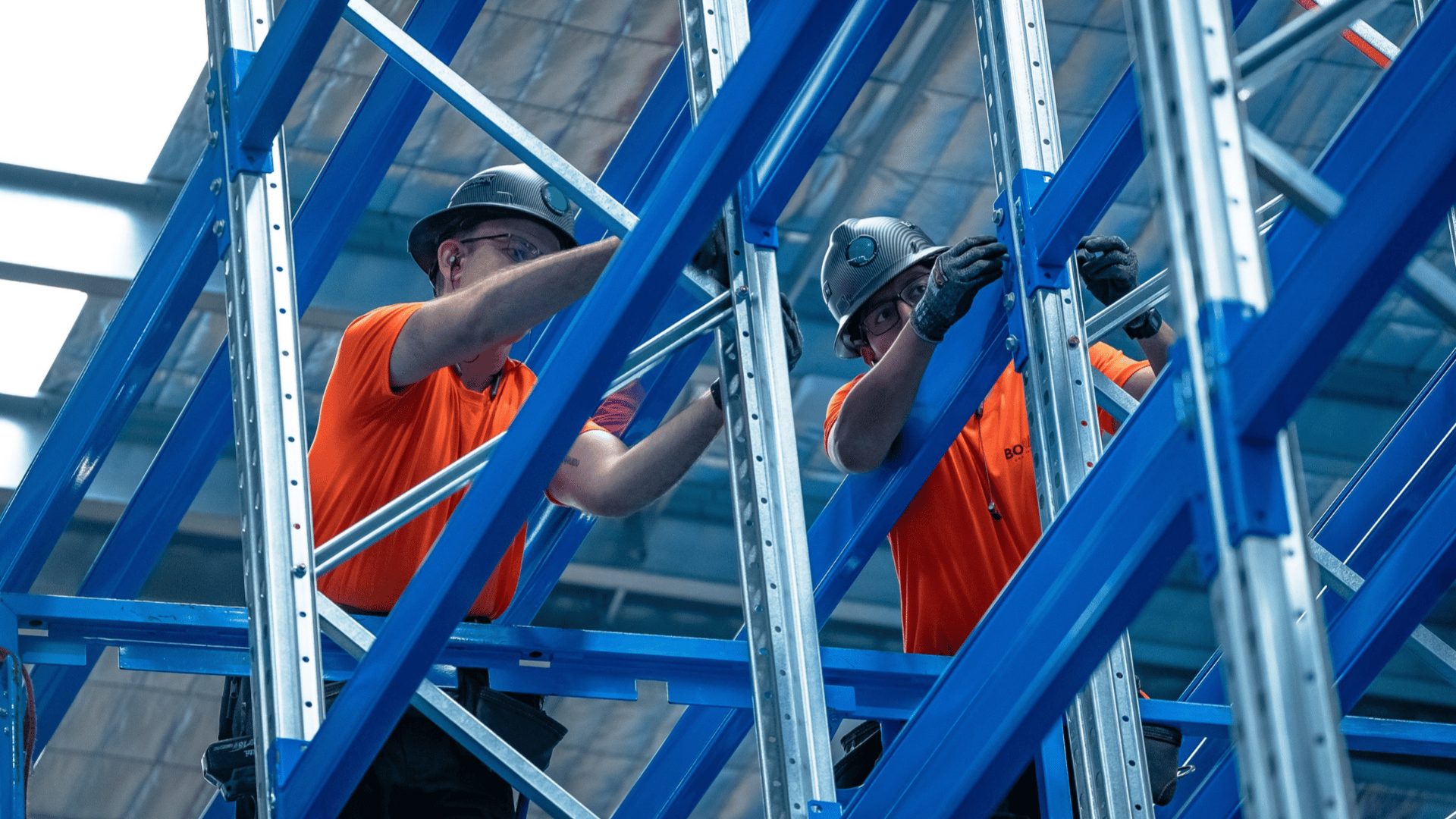
The role involves building, positioning and securing warehouse storage systems. Depending on the project and your level of experience, tasks may include assembling frames, installing beams, checking alignment, drilling into concrete and anchoring the completed racking to the floor.
Racking Installers use hand and power tools and follow technical drawings. Appropriately trained, licensed and authorised team members may also operate scissor lifts or forklifts. Everyone works as part of a Field Crew, with each person responsible for a different part of the installation process.
If you join BORACK at Installer Level 1, you will learn the fundamentals alongside experienced team members before moving into equipment operation and more complex installation work.
For a closer look at the role, read: What does a Racking Installer actually do?
How are the work environments different?
A warehouse worker usually joins a warehouse that is already operating. The storage system is in place, products are arriving and leaving, and the daily work follows the warehouse's inventory and dispatch requirements.
A Racking Installer may arrive while a warehouse is being built, expanded or reorganised. The Field Crew could spend several days or weeks on one installation before moving to another project.
This means racking installation can involve more travel and changes in work location. Start times and weekly hours can also depend on the project. Warehouse work may offer a more consistent location or roster, though this varies by employer.
Which role is more physical?
Both roles can be physically demanding, but the physical work is different.
A warehouse worker may spend much of the shift walking, standing, lifting packages, pushing equipment or repeating picking and packing tasks. The pace can be shaped by order volumes and dispatch targets.
A Racking Installer handles steel components, uses tools and works through different stages of a construction project. The role can involve bending, reaching, carrying materials and, once properly trained and authorised, working at height using access equipment.
Neither job is simply about strength. Stamina, accuracy, safe working and clear communication matter in both roles.
Do the roles require different licences or training?
Usually, yes.
A warehouse worker does not normally need a White Card to receive, pick or pack goods in an operating warehouse. However, the employer may require equipment training or the appropriate High Risk Work Licence if the job involves operating a forklift.
A Racking Installer carries out construction work, so you need a valid White Card. You also complete a site-specific induction before starting on a new project.
If you start with BORACK, you do not need to arrive with every equipment ticket already completed. The pathway introduces scissor lift and forklift training at the relevant stages as your skills develop.
Start with our guide: How do I get a White Card in Australia?
Can warehouse experience help you become a Racking Installer?
Yes. Warehouse experience does not automatically teach you how to install racking, but it can give you useful skills for the transition.
You may already understand warehouse traffic, materials handling, early starts and the importance of keeping work areas organised. You may also be comfortable completing a physical shift, following a process and communicating with different parts of an operation.
If you hold a forklift licence, that experience may become useful later in your development. You will still need to learn racking installation methods, tools, component names and safety procedures, but your warehouse experience can make the transition easier.
You would not be starting from zero. You would be bringing useful experience into a different kind of role.
Which role offers the right career path for you?
Both roles can lead to greater responsibility, but the pathways differ between employers.
A warehouse worker may progress into inventory, dispatch, team leadership, warehouse supervision or other logistics roles.
At BORACK, the Racking Installer pathway has seven positions: Installer Levels 1 to 4, Leading Hand, Site Supervisor and Site Manager. The work develops from basic installation tasks to equipment operation, leading a crew and managing complete projects.
Read more: Racking Installer career path: from Level 1 to Site Manager
Which role might suit you better?
Ask yourself three questions:
- Would you rather handle stock and orders, or build the structure that stores them?
- Would you prefer one main workplace, or projects that can change location?
- Do you want to build a career in logistics and warehouse operations, or in construction installation and site leadership?
Neither option is automatically better. The right role depends on the work you enjoy, the environment you prefer and where you want the experience to take you.
If your answers point towards racking installation, a paid trial can help you experience the work before deciding whether it suits you.
Read more: What should you expect from a paid work trial in construction?
Ready to see if racking installation suits you?
If you want practical work, a crew that will teach you properly and a role you can build a career out of, apply for a Racking Installer role with BORACK.
Sources
Apply Now

SIGN UP
A concise overview of our availability per state.
