

Article
Is racking installation dangerous? Safety standards explained.
October 2, 2026
Is racking installation dangerous? Safety standards explained.
If you're considering racking installation, it's reasonable to ask how dangerous the work can be.
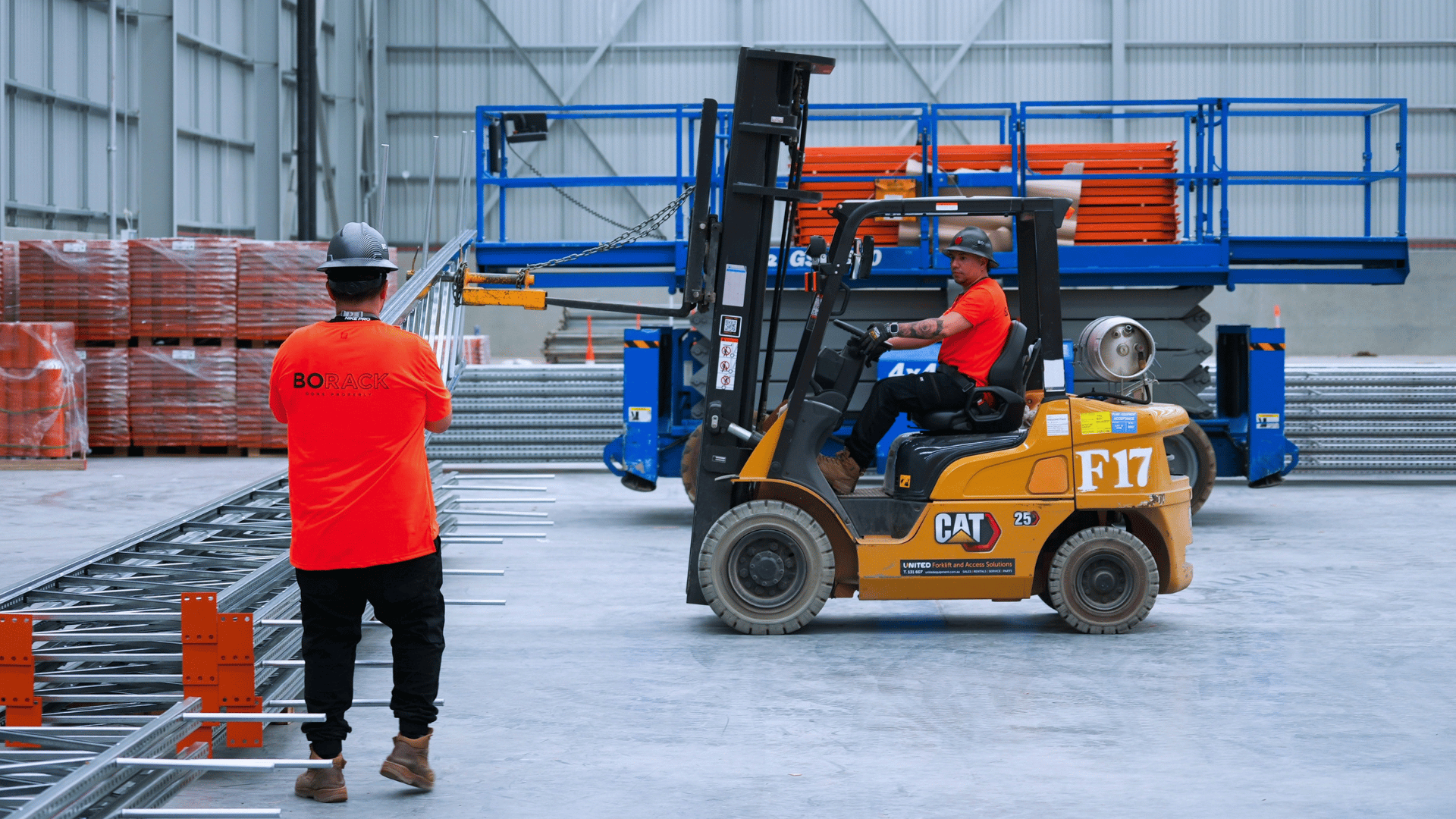
Racking installation can be dangerous if its risks are not properly controlled. The job can involve work at height, moving forklifts and scissor lifts, heavy steel components and power tools. On a well-run site, those hazards are managed through planning, training, supervision, suitable equipment, clear work zones and the right PPE.
What are the main risks in racking installation?
A racking project brings people, machinery and materials into the same work area. The main risks can include:
- Falling while working at height
- Being struck by moving equipment or falling materials
- Components shifting while frames are raised or secured
- Strains from lifting, carrying or working in awkward positions
- Noise, dust and flying particles while drilling
- Slips and trips caused by tools, packaging or materials
Those risks change as the project moves through frame building, frame standing, beaming, levelling, drilling and anchoring. Knowing what stage the crew is working on helps everyone understand what to watch for.
For a closer look at the work, read: What does a Racking Installer actually do?
How are the risks controlled on site?
Staying safe during racking installation comes down to three things: understanding the task, using the right equipment and speaking up when something does not look right.
1. Understand the task before you begin
Before starting work, you complete a site induction covering the hazards, emergency procedures, traffic arrangements and PPE requirements. The crew should also understand the work sequence, who is responsible for each part and where equipment will move.
Technical drawings and manufacturer instructions guide how the racking is assembled and secured. When a task is classified as high-risk construction work, the relevant Safe Work Method Statement must also be understood and followed.
If the plans do not match the conditions in front of you, stop and check with your team leader before continuing.
2. Use the right controls and equipment
Equipment should be checked before use, and materials should be positioned where the crew can reach them without blocking walkways. Exclusion zones and traffic controls help separate people from moving plant, raised loads and work happening overhead.
During frame standing, for example, the forklift operator, runner and scissor lift operator each have a different responsibility. The task depends on clear communication and coordinated movements.
The controls also change with the task. Dust extraction helps control concrete dust while drilling. Mechanical equipment can reduce unnecessary manual handling. PPE protects against risks that remain after other controls are in place.
3. Stop and speak up
If something does not look right, stop and tell your team leader.
That might be a damaged component, unstable ground, blocked travel path, faulty equipment or a detail that does not match the drawing. You should never climb the racking, bypass a safety control or keep going simply because the crew is busy.
Speaking up gives the team a chance to fix the issue before someone is hurt or completed work has to be pulled apart. Asking a safety question is part of doing the job properly.
What safety standards guide racking installation?
The exact legal requirements depend on the state or territory where the project is located. Work must follow the applicable workplace health and safety laws, site procedures, approved drawings, manufacturer instructions and relevant codes of practice.
For steel storage racking within its scope, the AS 4084 series is an important reference. AS 4084.1:2023 covers design, while AS 4084.2:2023 covers operation and maintenance. Safety guidance also addresses risks such as falls, moving plant, falling objects and hazardous manual tasks.
What PPE do Racking Installers wear?
The required PPE depends on the site and task. It commonly includes safety footwear, hi-vis clothing, a helmet, safety glasses, cut proof gloves and hearing protection. Respiratory protection may also be required when work creates dust or another airborne risk.
Your site induction will explain what you need and when to wear it. PPE needs to fit properly and remain in usable condition, but it is only one part of the safety system. Planning and controlling the hazard come first.
What training do you require before starting?
You require a valid White Card before carrying out construction work. You will also complete a site-specific induction because each project has a different layout, work sequence and set of hazards.
Read more: How do I get a White Card in Australia?
Operating equipment requires additional training. A Racking Installer requires appropriate training, competency and site authorisation before operating a scissor lift. Operating a forklift requires the correct High-Risk Work Licence, along with familiarisation with the machine and workplace.
Read more: How do I get a scissor lift ticket in Australia?
Read more: How do I get a forklift ticket in Australia?
A ticket or licence proves you have completed the required training or assessment. It does not mean you should operate unfamiliar equipment without instructions or complete work you have not been authorised to do.
Is racking installation the right kind of work for you?
The role may suit you if you enjoy active work, can follow a clear process and want to see a physical result at the end of the day.
Ready to start your racking installation career?
If you want practical work, a crew that will teach you properly and a role you can build a career out of, apply for a Racking Installer role with BORACK.
Sources
- Safe Work Australia — Construction work: Model Code of Practice
- Safe Work Australia — Managing the risk of falls at workplaces: Model Code of Practice
- Safe Work Australia — Elevating work platforms: Model Code of Practice
- Safe Work Australia — High risk work licences
- WorkSafe Victoria — Pallet racking operation and maintenance
- SafeWork NSW — Pallet racking fact sheet
Apply Now

SIGN UP
A concise overview of our availability per state.
