

Article
How do I get a construction job in Australia?
July 27, 2026
How do I get a construction job in Australia?
If you're weighing a career change or you've landed in Australia on a working holiday, construction is worth a proper look. You can get a construction job in Australia without previous experience by getting your White Card, confirming your work rights, and applying for entry-level roles where you learn on the job. Most employers are looking for people who show up, work safely, and are ready to be part of a crew, not a long resume.
Do you need experience to get a construction job?
No — not for every role.
Most people start in entry-level labouring, installation, or Field Crew positions. What matters early on is whether you turn up on time, follow instructions, work safely, and keep learning.
Experience from other industries still counts. Time in warehousing, hospitality, delivery driving, retail or manufacturing shows you can handle a full shift, follow a process, and work well with people you've just met.
You don't need to pretend you already know it all. It's better to be upfront about being new and show you're genuinely ready to learn.
What do you need before you apply for construction work?
The basics depend on the role and the site, but a few things are worth sorting before you apply.
Start with your work rights. If you're on a visa, check your current conditions through VEVO — not what someone told you in a backpacker group. Your own visa record is what matters.
Next, get your White Card. This is the general construction induction card required before you can carry out construction work. The training covers basic site safety, common hazards, and how risks are controlled. It's recognised nationally, although the training and card system is run state by state.
For a full breakdown: How do I get a White Card in Australia?
You'll also want suitable clothing and PPE ready, if the role calls for it — usually steel-cap boots, long work trousers, and hi-vis. Your employer or labour-hire provider should confirm exactly what a specific site needs.
Reliable transport matters too — sites aren't always near public transport, and start times can be early.
What construction jobs can you get with no experience?
A first job in construction doesn't have to define your career — it's a chance to learn how a site works and find out what suits you.
Entry-level options include general labouring, trade assisting, warehousing, installation work, or site support. Some are short-term; others open into a real skills pathway.
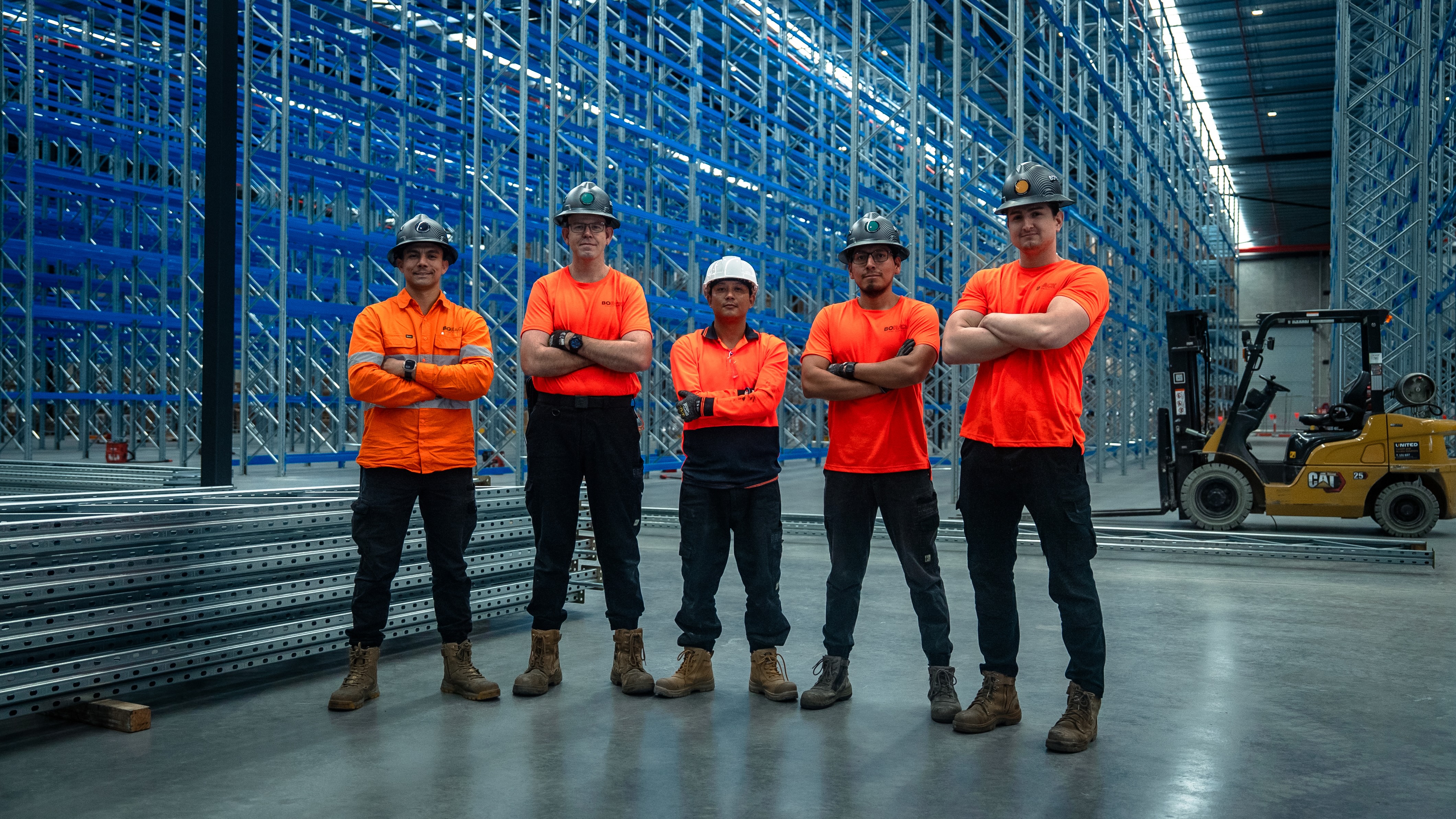
Racking installation is one option worth considering if you want practical, hands-on work in warehouse and industrial settings. A Racking Installer works as part of a crew to install, adjust, and maintain warehouse storage systems — preparing materials, using tools, following site plans, and helping the crew get each stage done safely.
At BORACK, the Racking Installer pathway starts at Level 1, with a clear track through Level 2, Level 3, Level 4, Leading Hand, Site Supervisor, and Site Manager.
Read more: What does a Racking Installer actually do?
What do employers look for in an entry-level construction worker?
For someone new to construction, employers usually care less about a long list of tickets and more about the basics.
Reliability is one. If the start time is 6:30 am, being there ten minutes earlier says a lot. Communication is another — listening when a Leading Hand or Site Supervisor gives instructions, asking when you're unsure, and flagging a problem early instead of late.
Safety matters from day one. Wearing the right PPE, using equipment properly, and not cutting corners aren't optional extras — they're the baseline.
Employers also want people who work well in a team. A good crew communicates clearly, supports each other and stays focused on getting the job done safely.
How can you make your application stronger?
Keep it clear and honest.
List the tickets you already have — White Card, forklift licence, scissor lift ticket. If you don't have the extras yet, that's fine. Just don't claim tickets you haven't got.
Read more: How do I get a scissor lift ticket in Australia?
Read more: How do I get a forklift ticket in Australia?
Include your location, work-rights status, and availability. If you can travel between sites, say so. If you've got experience that shows reliability or physical capability, mention that too.
A short intro can help. Explain why you want hands-on work and what you'll bring to a crew. Keep it simple — you don't need corporate language or a long cover letter.
For example: "I'm looking for a hands-on role where I can learn construction skills. I've got my White Card, reliable transport, and experience working in a fast-paced warehouse team. I'm ready to start, work safely, and learn from an experienced crew."
What should you expect on your first day?
Your first day might feel unfamiliar — new people, new equipment, new site rules to take in. That's normal.
Expect a site induction before you start work. This is separate from your White Card training and covers the specific site: hazards, emergency procedures, and expectations.
Wear the required PPE, listen closely, and ask if you're not sure about something. No one expects you to know everything on day one — they do expect you to pay attention and speak up before doing anything unsafe.
Construction work is physical — you might spend the day standing, walking, lifting, or carrying in changing weather. If you like active work and seeing a real result at the end of the day, that's a good sign.
Can working holidaymakers get construction jobs in Australia?
Yes — if your visa conditions allow it and you meet the role requirements. Check your current work conditions in VEVO and be upfront about your availability when you apply.
A good starting point: sort your work rights, tax file number, bank account, White Card, and transport before you start applying. That way you can move fast when the right role comes up.
Read more: How can working holidaymakers get construction jobs in Australia?
Ready to start your racking installation career?
If you want practical work, a crew that will teach you properly and a role you can build a career out of, apply for a Racking Installer role with BORACK.
Apply Now

SIGN UP
A concise overview of our availability per state.
